
A wet winter, a hot and dry summer—our gardens are increasingly facing extreme weather conditions. How can we prepare our outdoor spaces for this?
You may be familiar with the scenario: after a period of heavy rainfall, a long stretch of heat and drought suddenly sets in. The lawn discolors, plants begin to wither, and trees shed their leaves prematurely.
Yet, the story doesn’t end with drought. When autumn and winter return, we are once again confronted with heavy precipitation, saturated soil, and water that struggles to drain away.
Too much water in the winter, too little in the summer—it may seem like a contradiction, but both problems actually call for the same solution: we need to rethink our gardens and design them to be more climate-resilient.
With nearly four decades of experience in tree nurseries, garden design, and landscape architecture, I have clearly observed the seasons changing.
While planting was once possible over much longer periods, we are now seeing a shift in the seasons. Wet spells place new demands on our soil, while hot, dry periods are becoming increasingly pronounced—making life more difficult for plants.
On one hand, an excess of water can lead to oxygen deprivation in the soil, disease, and weakened plants. On the other, prolonged drought can cause heat stress and plant loss.
This means that we must look beyond simply choosing plants we find attractive; we must primarily consider: which plants are suited to this specific location—and to the conditions of tomorrow?
A climate-adaptive garden is an outdoor space designed with changing environmental conditions in mind—addressing not only drought and heat, but also heavy rainfall, waterlogging, soil composition, and biodiversity.
It is not defined by a single specific measure; rather, a climate-adaptive garden is the result of various choices that, together, create a more resilient whole:
It is about moving away from constantly trying to correct nature, and instead working in greater harmony with it once again.
A good climate-adaptive garden begins beneath our feet. When planting new vegetation, we must consider how the soil responds to extreme rainfall.
The latter is often not the best solution. After all, rainwater is not wastewater; it is a valuable resource that we can capture, retain, and reuse. Furthermore, doing so reduces the burden on the sewer system and helps prevent potential flooding.
Rainwater harvesting can play a significant role in this. Green roofs, storage reservoirs, and infiltration systems can also help keep water in the local environment for longer.
Water captured today can prove useful tomorrow during a dry spell.

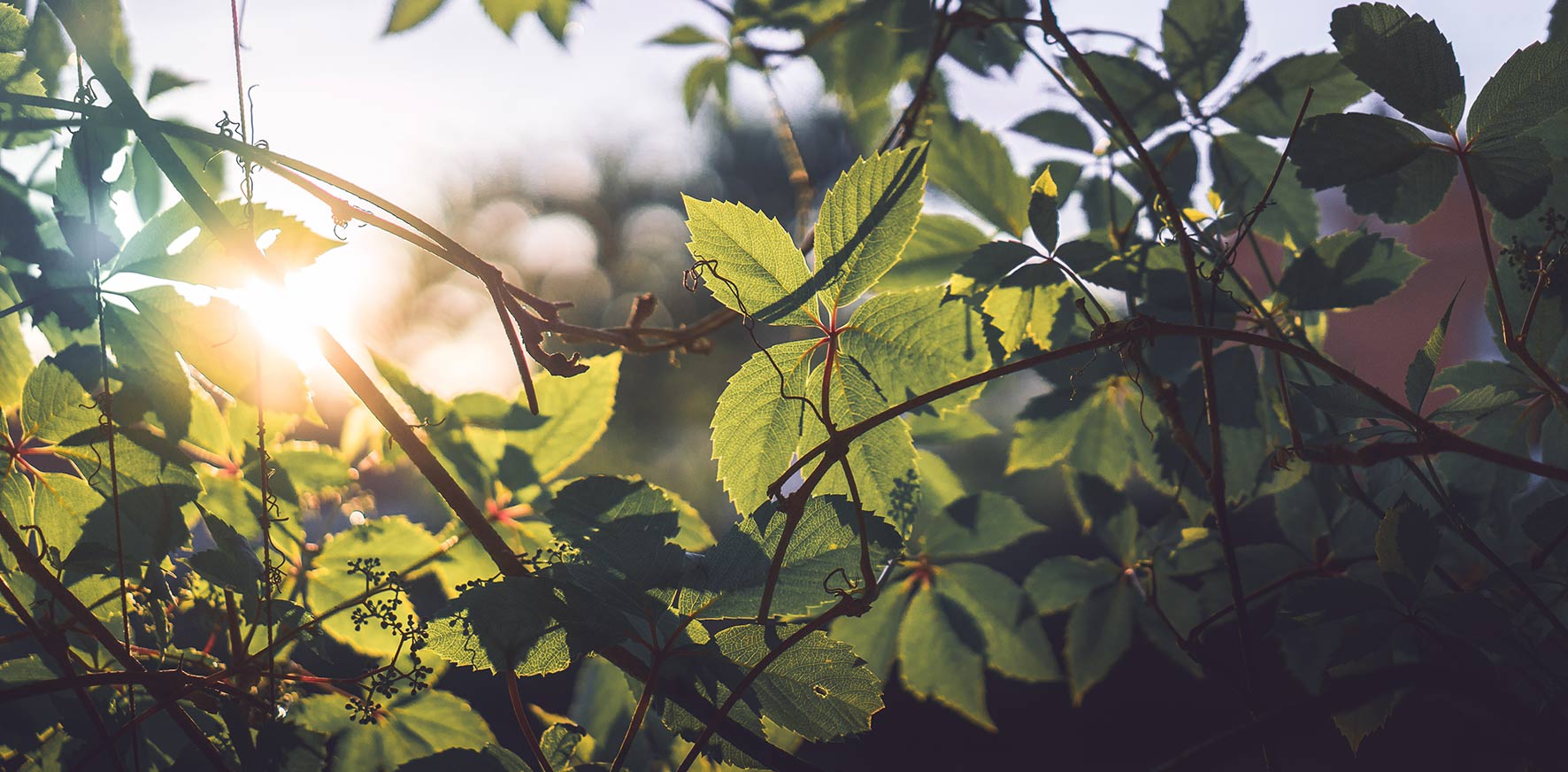
A climate-adaptive garden does not begin with a list of “drought-resistant plants.”
The most important question remains: Which plant is suited to this specific location?
By asking these questions beforehand, we can avoid many problems later on.
That is also why plant knowledge remains so essential in climate-adaptive garden design.
A plant might be perfectly suited for a dry garden, yet still be the wrong choice if it is planted in the wrong spot.
Bare soil dries out more quickly, so a simple layer of mulch or bark can make a significant difference. Mulch helps retain moisture for longer, limits weed growth, and protects the soil against drying out and erosion.
In the event of heavy rainfall, a good ground cover can also help water infiltrate the soil more effectively. While it is a relatively simple measure, it fits into a much broader approach to sustainable and climate-adaptive gardening.
New trees, hedges, and plantings require extra attention during their first few years. This does not mean, however, that you need to walk around the garden with a hose every evening; drip irrigation can deliver water much more precisely to the plants, while also limiting loss through evaporation.
But an even more important question is: do we actually need that much water? By choosing plants suited to their specific location, improving the soil, and using water efficiently, we can significantly reduce the need for irrigation.
A climate-resilient garden, therefore, does not begin with a sprinkler, but with the design.
A garden with greater variety is not only more interesting to look at; diverse plantings also foster stronger ecological cohesion—consider, for instance, a mixed hedge.
Different plant species can work together to create a more resilient structure, while also providing food and shelter for birds, insects, and other wildlife. Flowering plants, trees, and shrubs all play a vital role in this.
Biodiversity is not merely an optional extra to be added to a garden later on; it can be integrated into the design from the very beginning.
The classic lawn is perhaps one of the clearest examples of how our expectations regarding a garden might need to change. Does a lawn really have to remain perfectly green throughout every dry summer?
A biodiversity-rich lawn can be an interesting alternative. By combining grasses with flowering species, you create a more natural and varied type of vegetation.
The result? Less emphasis on a perfectly green lawn, greater biodiversity, and—as an added bonus—less mowing. Less work and more nature: that’s a great win-win.
And then, of course, there are the trees. Perhaps nowhere is their value more apparent than during a hot summer. Just try standing beneath a mature tree when the sun is beating down—the difference is immediately noticeable!
Trees provide shade and play an important role in the microclimate of our surroundings. Furthermore, they are an essential component of a biodiverse garden.
For this reason, a tree should not be viewed merely as an expense in terms of maintenance; rather, it is an investment in the future. So, take good care of the trees you already have!
And wherever there is space, don’t hesitate to plant another one.
You don’t necessarily need to redesign your entire garden; start by observing.
Sometimes, a relatively small intervention can make a big difference.
For me, designing a climate-adaptive garden goes beyond simply creating an attractive combination of plants. It is about the interplay between soil, water, plants, trees, biodiversity, and management—and this is precisely where Groencoach can assist you.
Drawing on years of experience in the green sector, I combine practical knowledge with expert guidance on ecological gardens, climate adaptation, planting schemes, and water management. This expertise can also be applied to larger-scale projects, residential developments, and public spaces.
The approach is straightforward: viewing your outdoor space as a cohesive whole and working together to find a solution that suits both you and the specific location.
You don’t have to wait for the next heatwave or flood to start thinking about your garden. A well-thought-out design can account for tomorrow’s conditions today.
Are you curious about the possibilities for your garden, plot, or outdoor space? Get in touch with Groencoach for expert garden advice, a planting plan, or guidance on creating a climate-resilient, ecological landscape.
Transform your garden from a space that requires constant maintenance into an outdoor environment that works in harmony with nature.
Groencoach – getting your garden ready for the climate of tomorrow.